Film laboratory simulator · Version 1.0

A film laboratory in your grade.

CinemaLAB takes your footage through a modelled photographic process: camera film, development, printing and projection. Choose from more than 410 modelled emulations of film stocks and historical processes, and grade the way a laboratory timer did.

$125 $199 Black Friday launch price $125 for the first month, then $199. One payment, perpetual licence for two computers.

DaVinci Resolve · Final Cut Pro · After Effects · Premiere Pro
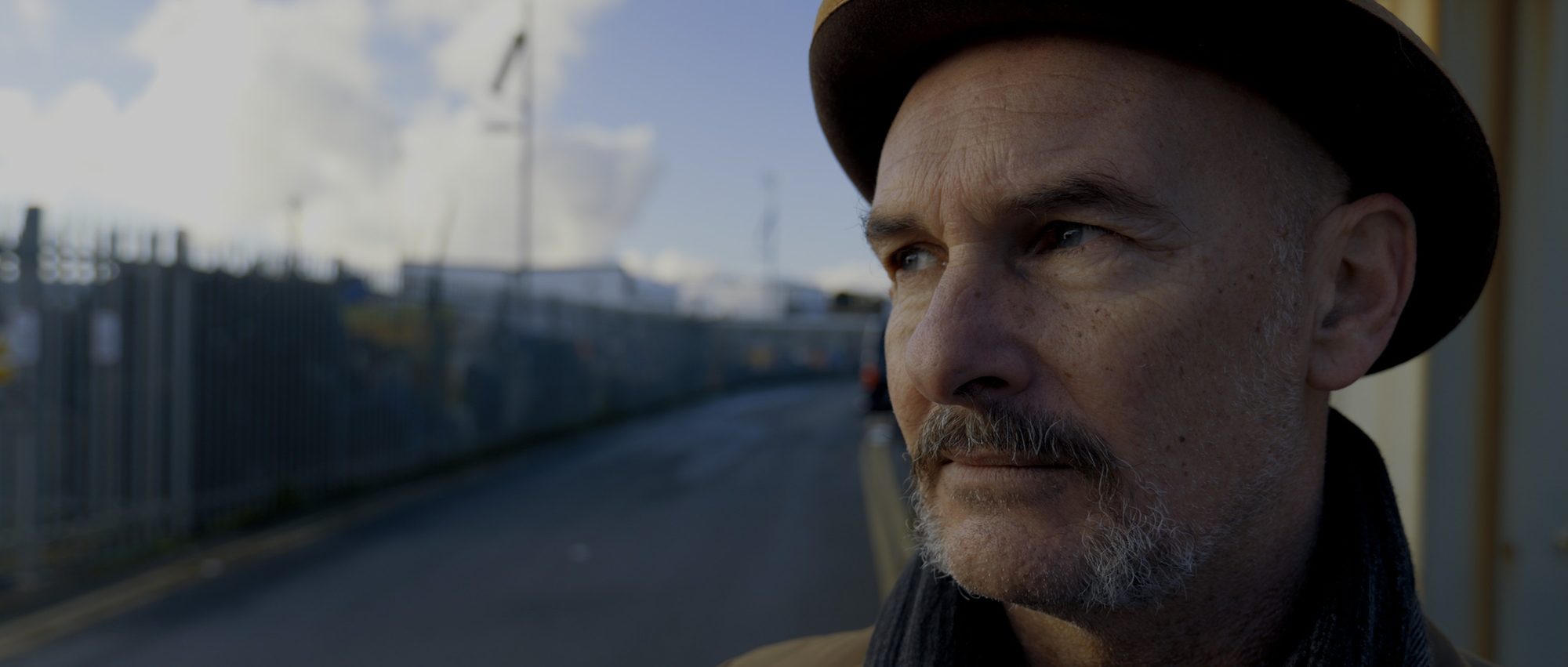
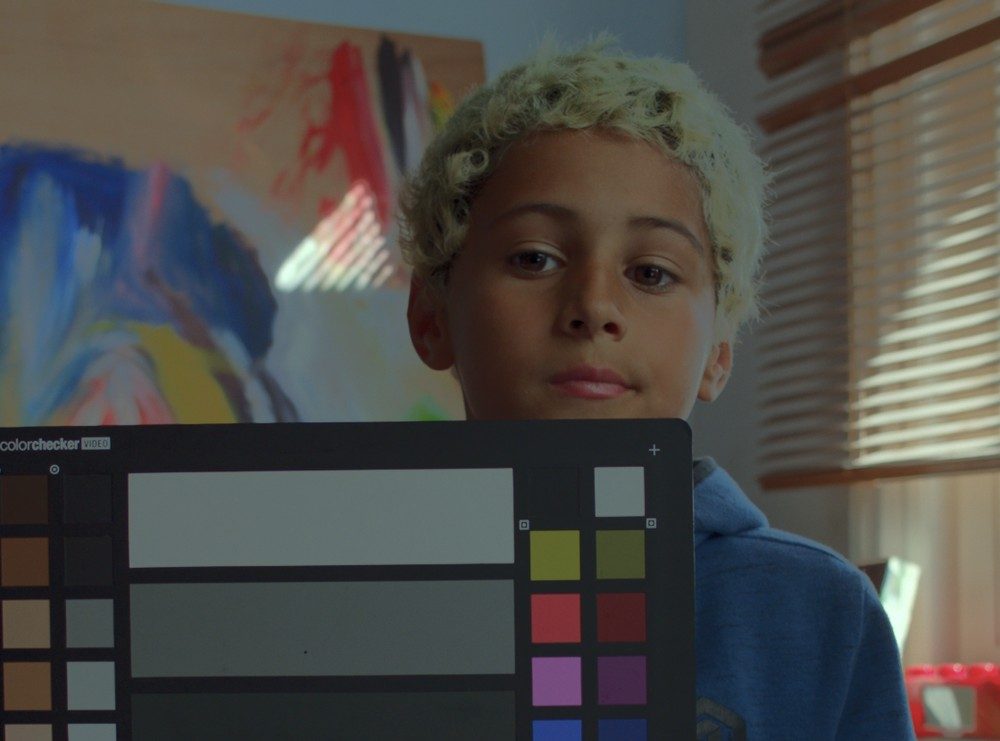
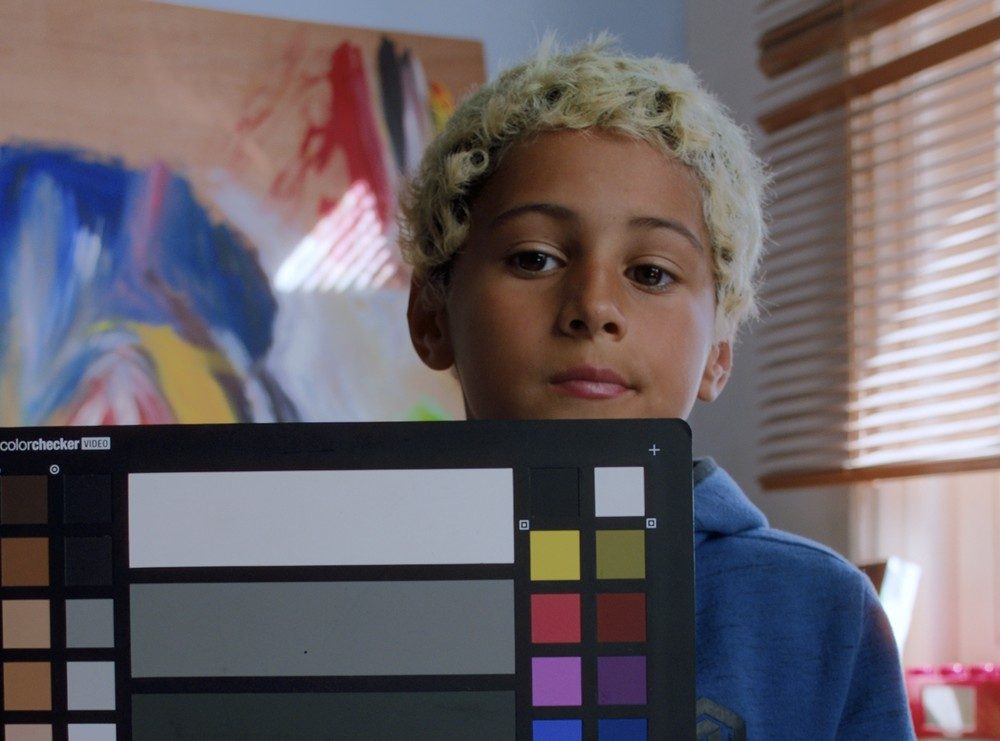
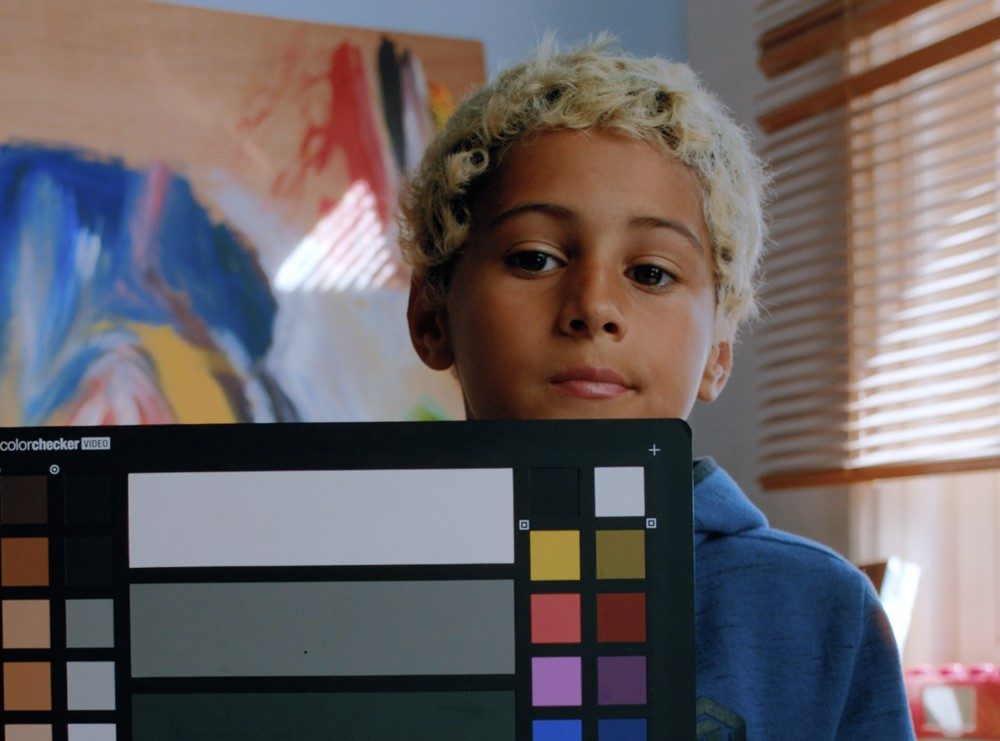
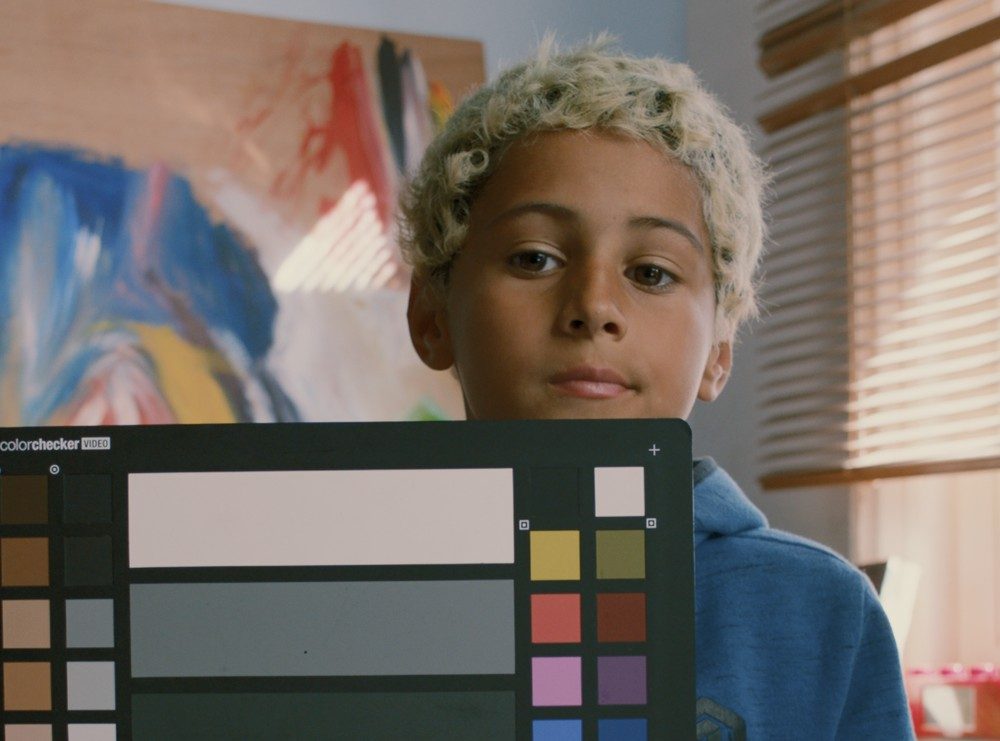
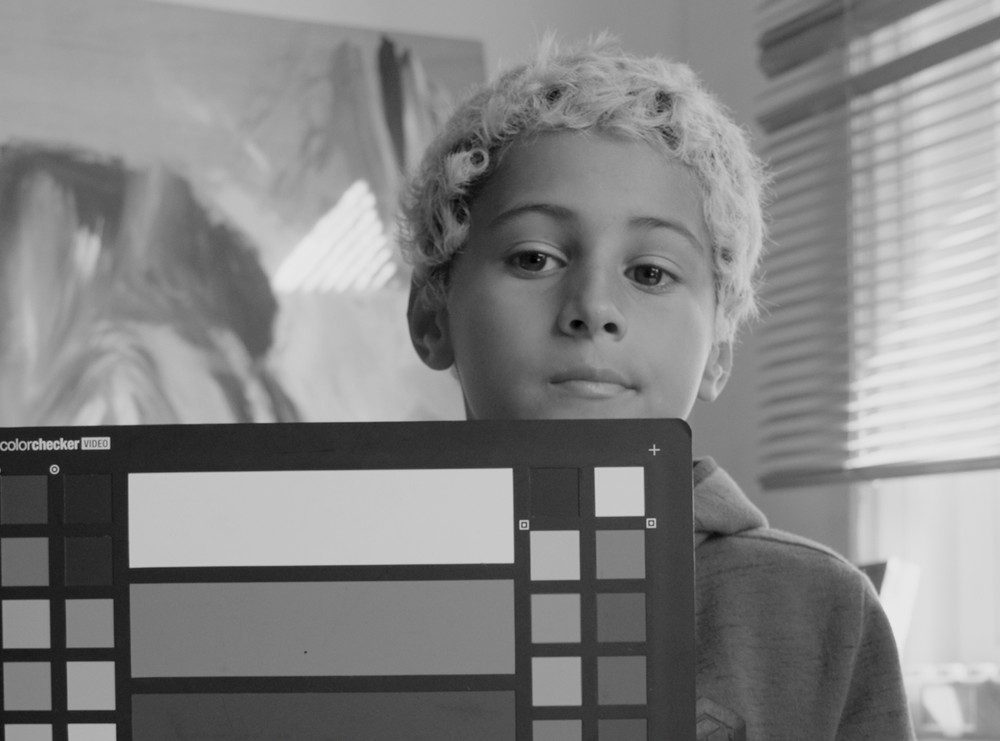
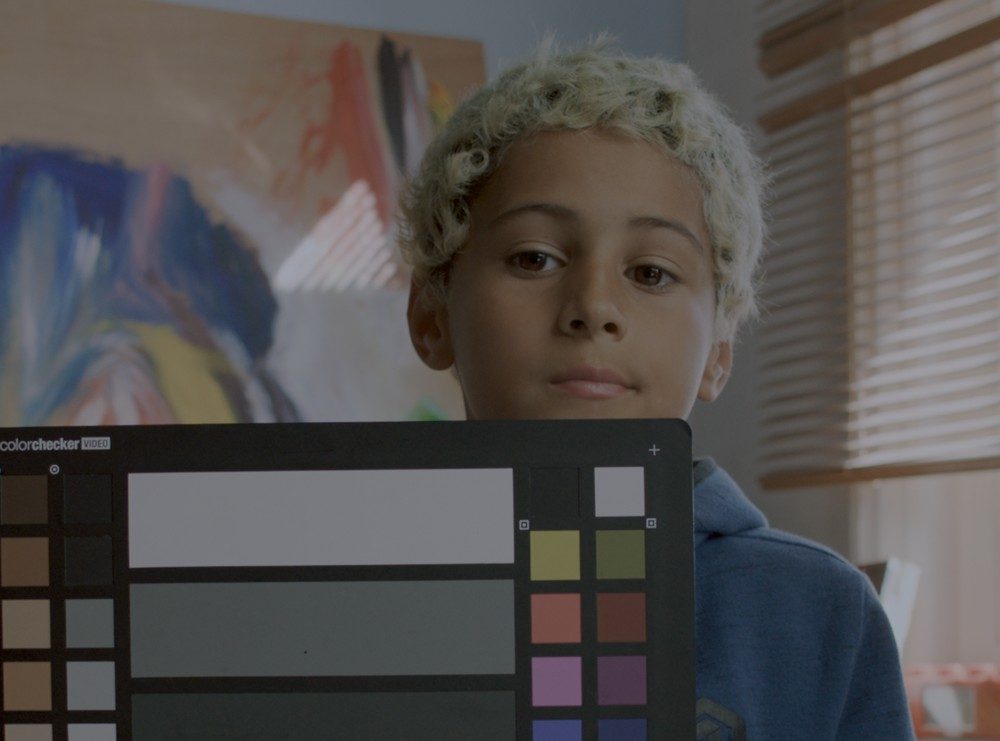
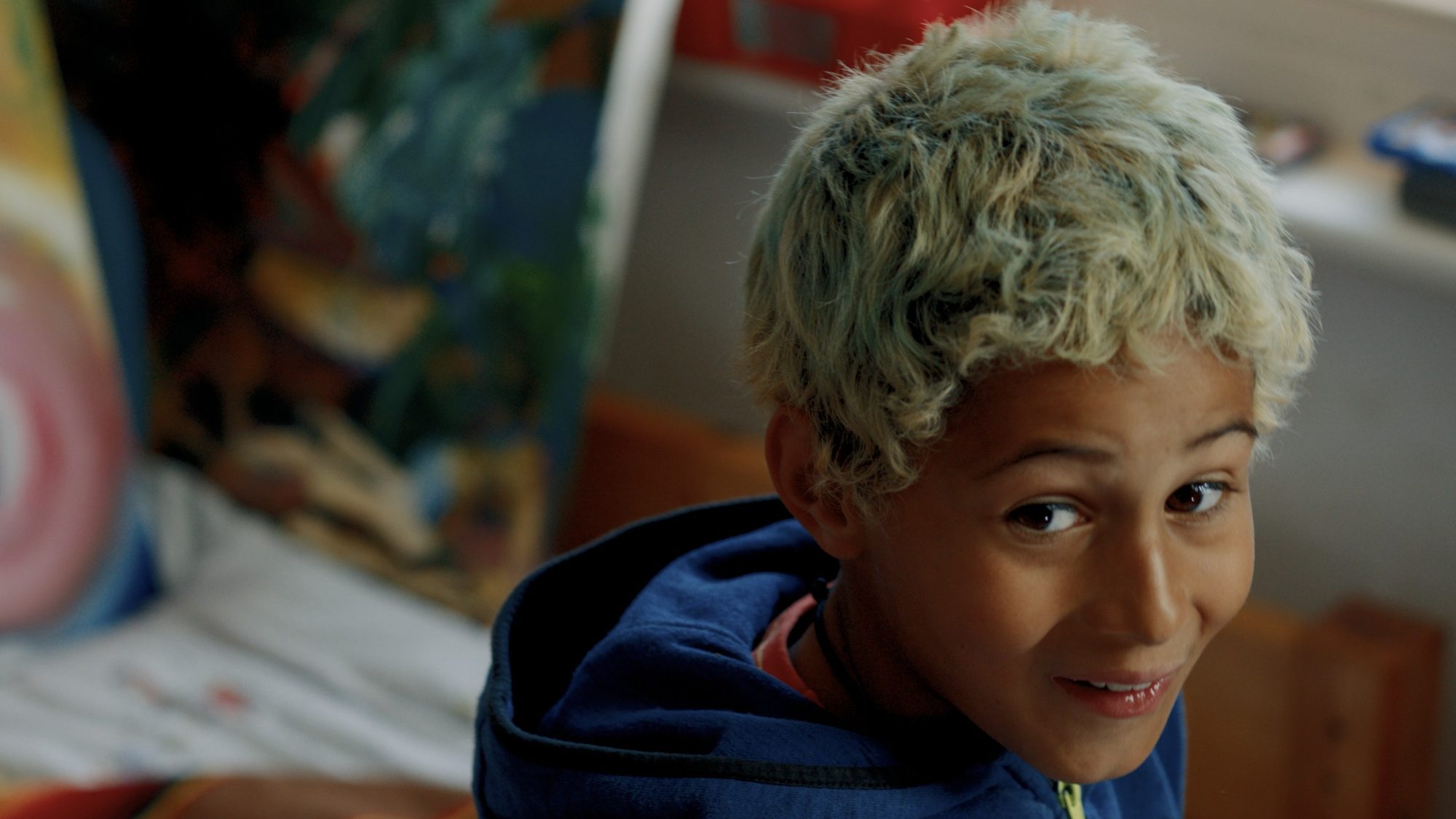
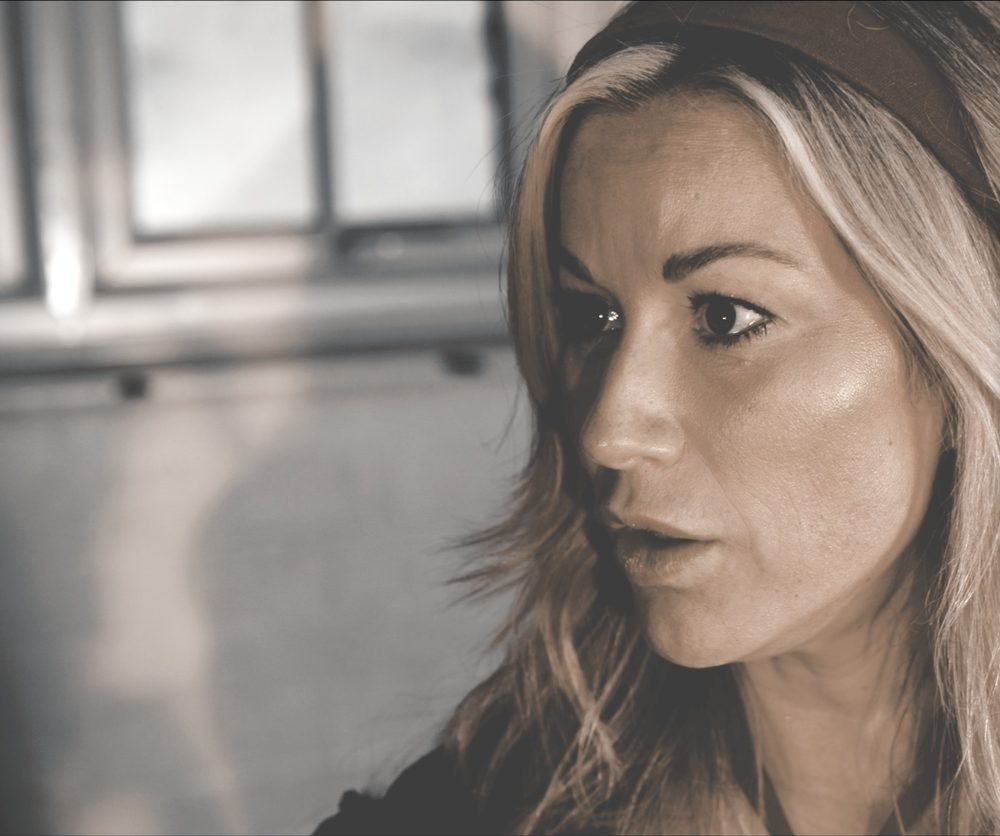
Portrait graded in CinemaLAB
413modelled stock and process emulations
247 · 113colour and black-and-white camera films
37print films, plus historical processes
4 hostsResolve, Final Cut Pro, After Effects, Premiere Pro
An emulation, not the original film. CinemaLAB is a simulator. Every film stock and process in it is our own modelled emulation, built from published film data and, where figures were never published, from marked estimates. It is not the manufacturer's film, product or data, and no manufacturer has made, checked or approved it.
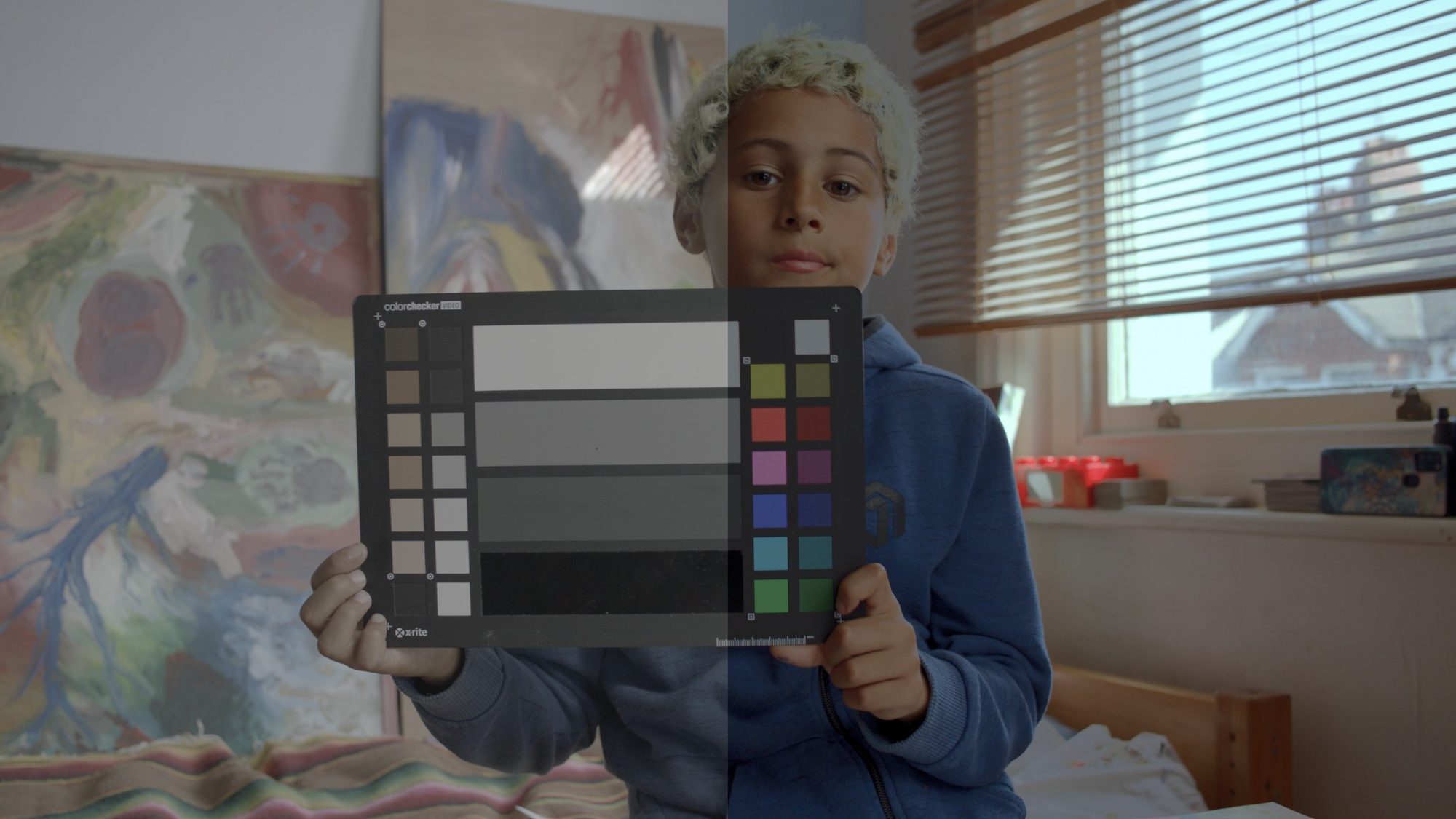
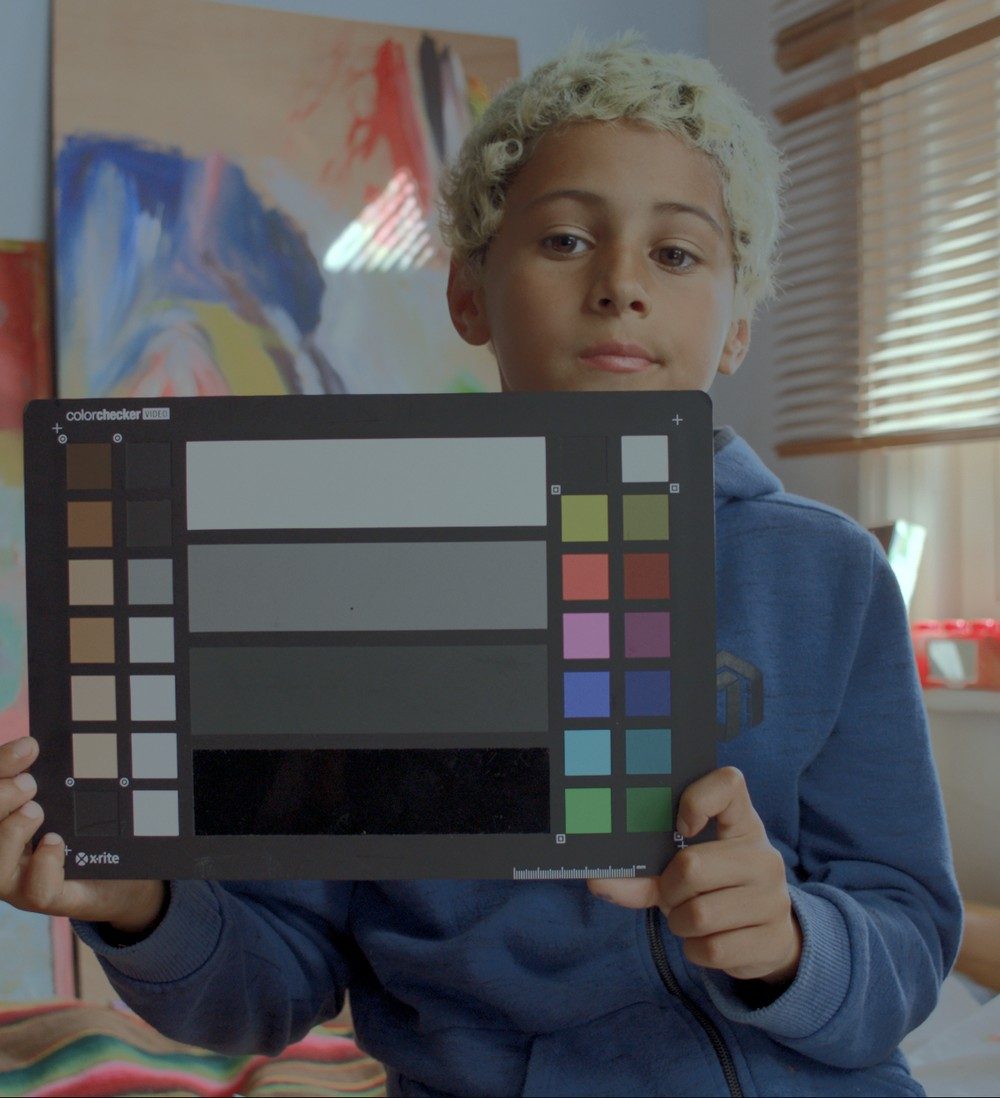
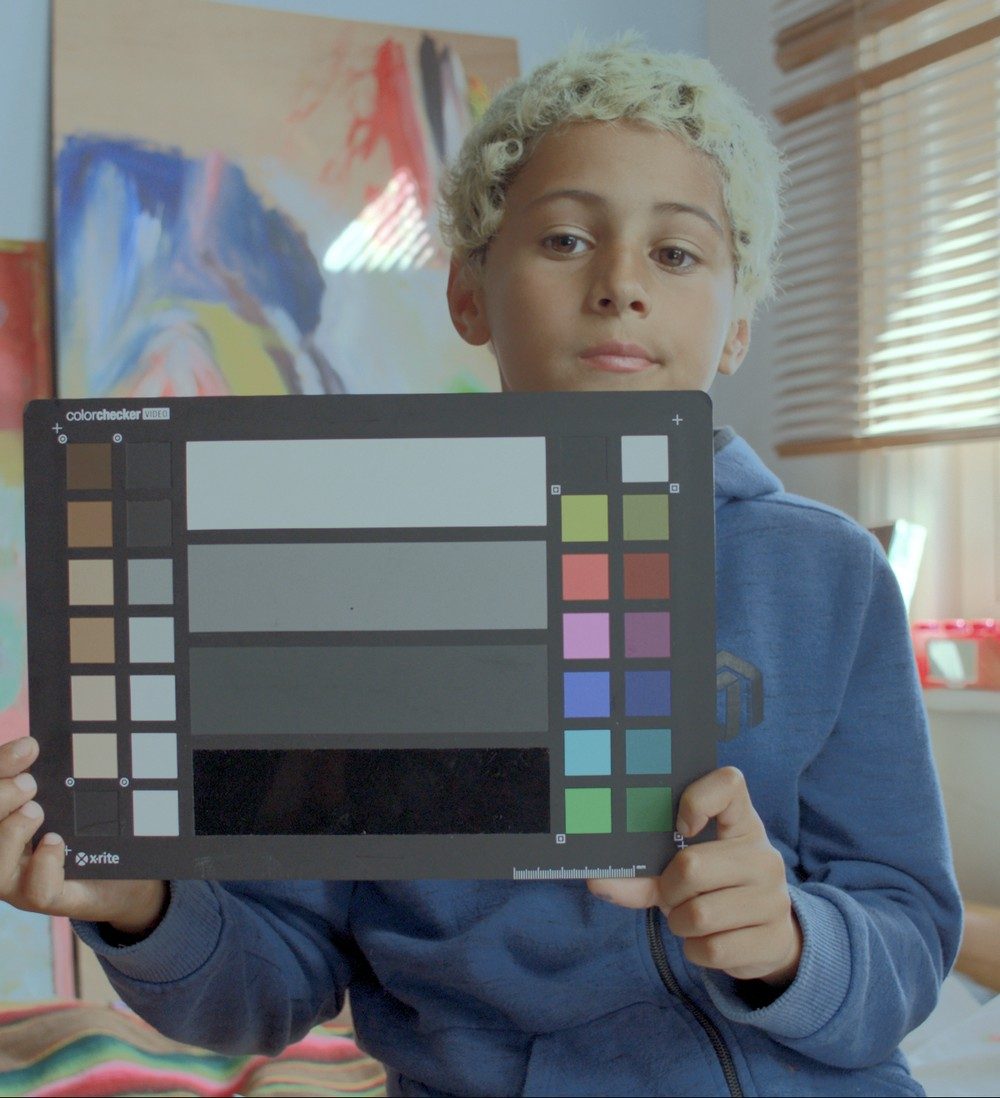
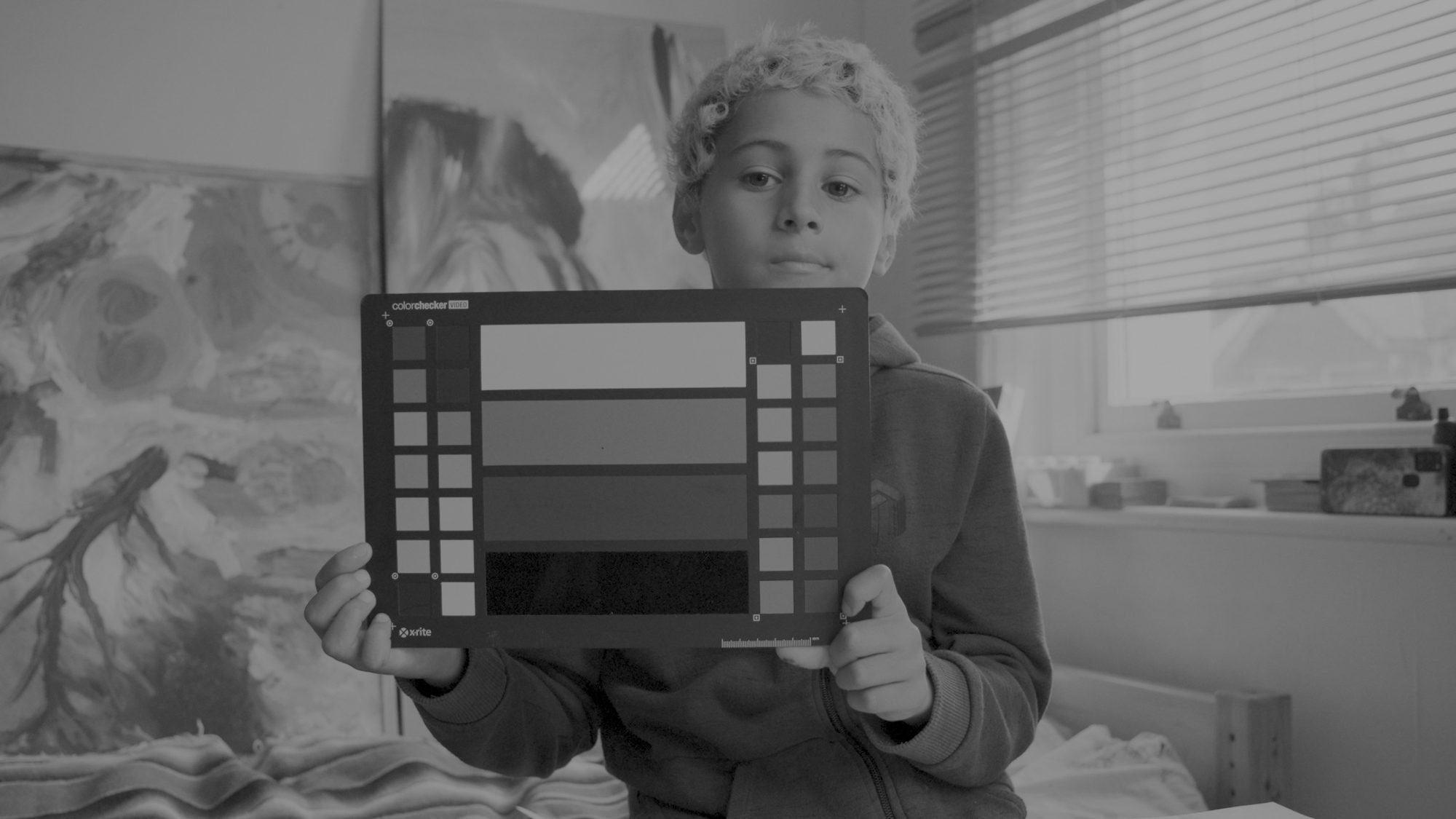
Before and afterCamera logCinemaLAB
Before and after. The camera's V-Log picture on the left; on the right the same frame through CinemaLAB: VISION3 500T 5219 printed on Kodak 5384.
What makes CinemaLAB different

The whole laboratory,
not a single look.

Most film looks are one fixed transform laid over the picture. CinemaLAB works the way a laboratory did, stage by stage, so exposure, development and printing all mean something.

01

A laboratory, not a look

Your picture exposes a camera film, the film is developed, printed onto a print film and projected, in that order, every time. Each stage is a named part of the plugin with its own controls.

02

Modelled from published film data

Characteristic curves, spectral sensitivity, dye density, sharpness and grain for each stock. Where a figure was never published, a related film fills the gap and the profile says so.

03

It answers exposure like film

Push the exposure and the highlights roll off into the shoulder; pull it and the shadows settle into the toe. Colour shifts as the dyes do, not as a fixed transform would.

04

Any negative on any print

Choose the camera film and the print film separately: 1970s negative on a modern print, slide film printed, black-and-white on a colour route. Nothing is locked.

05

Floating point from camera to print

Scene-linear and wide gamut from camera to print, in full floating point. No Cineon box, no LUT grid: only the film shapes your image.

06

Graded like a lab timer

Exposure, printer lights in points, Warm–Cool and Green–Magenta, print contrast. One click of Time Shot exposes the shot the way a timer would.

How it works

Six stages, always in order.

Camera filmExposure, lighting, filters, the film's own spectral sensitivity.
DevelopmentPush and pull, contrast, colour coupling, zone development.
Lab chainInterpositives, internegatives, separations, film recorder.
PrintPrint film, printer lights, preflash, print development.
AgeingFade, stain, dust, scratches, weave. Off until you want them.
ViewingMonitor, dim room or theatre; projector black and white.
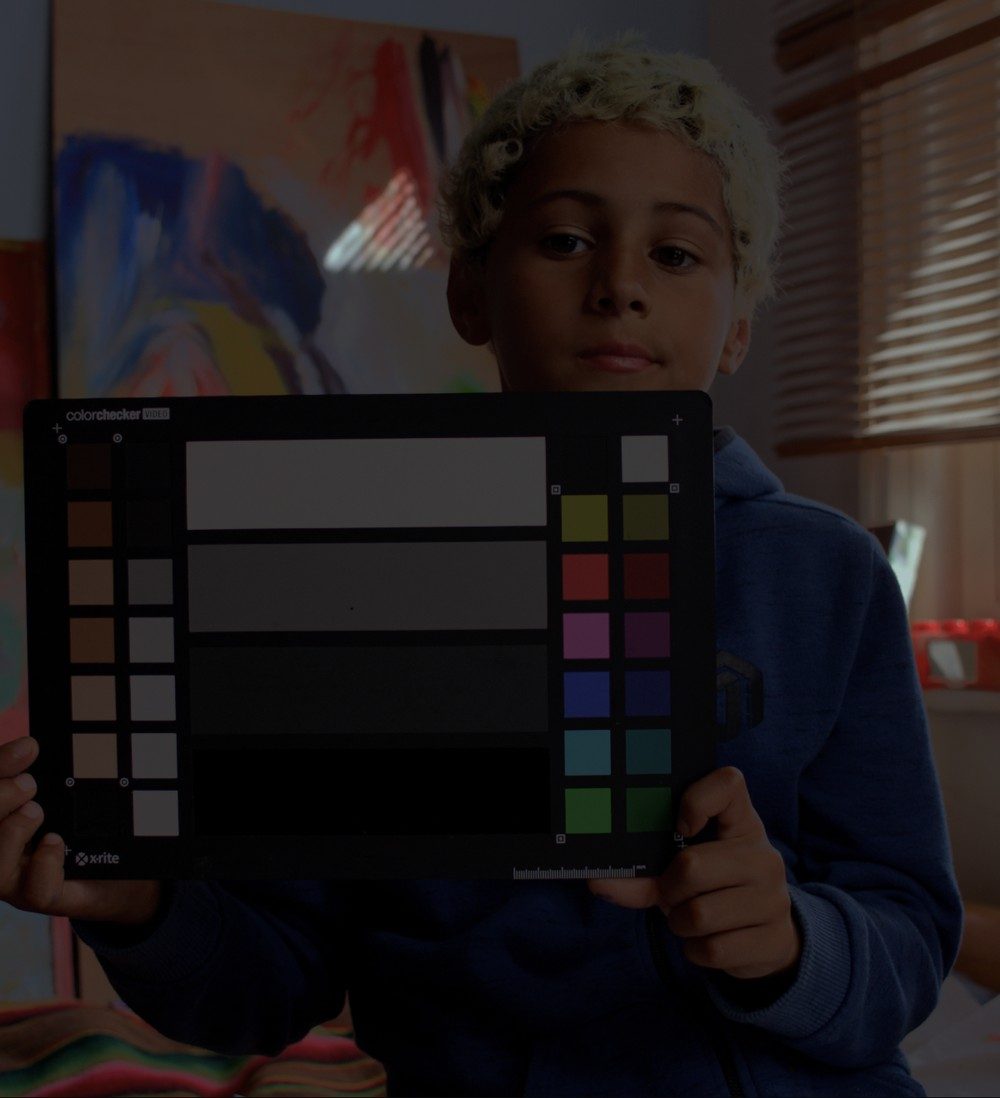
−2 stops
−2 stops
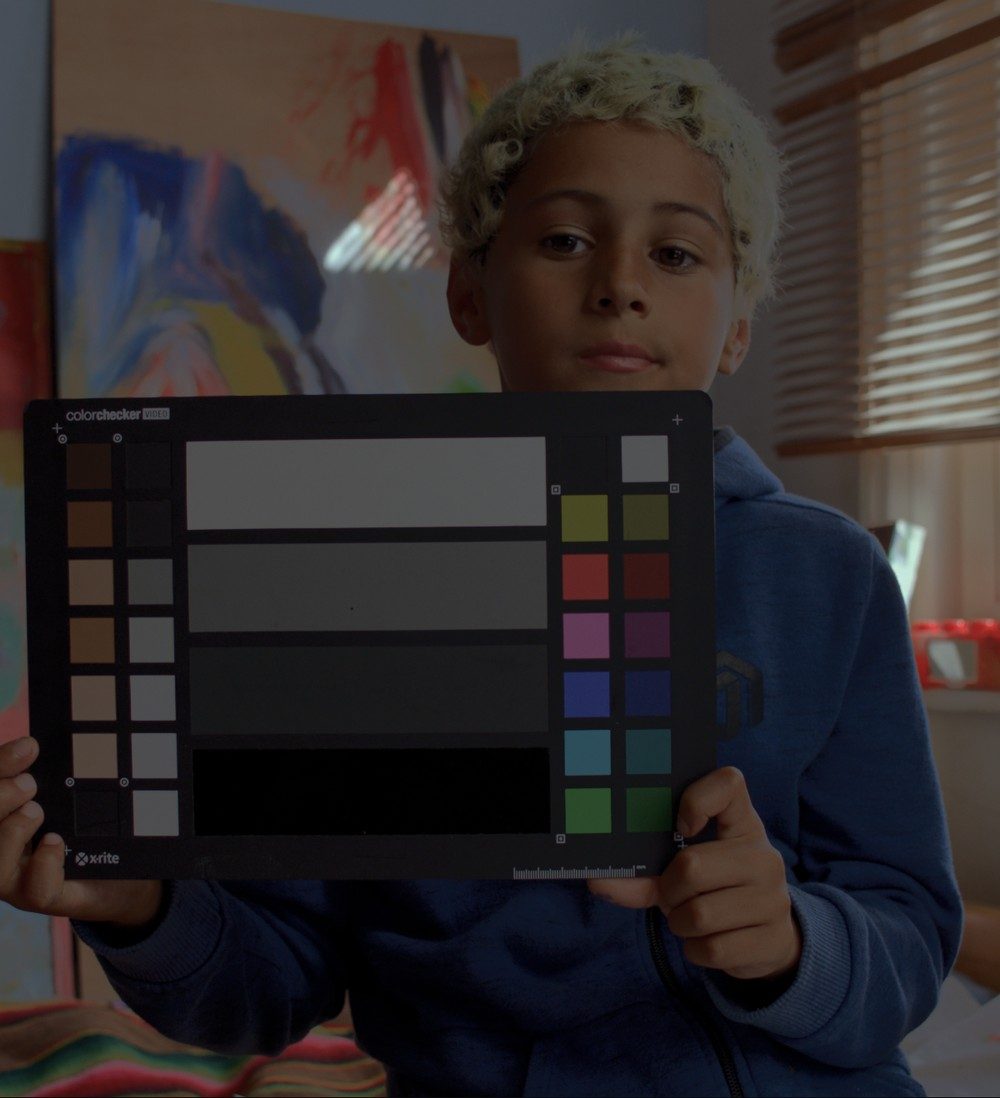
−1 stop
−1 stop
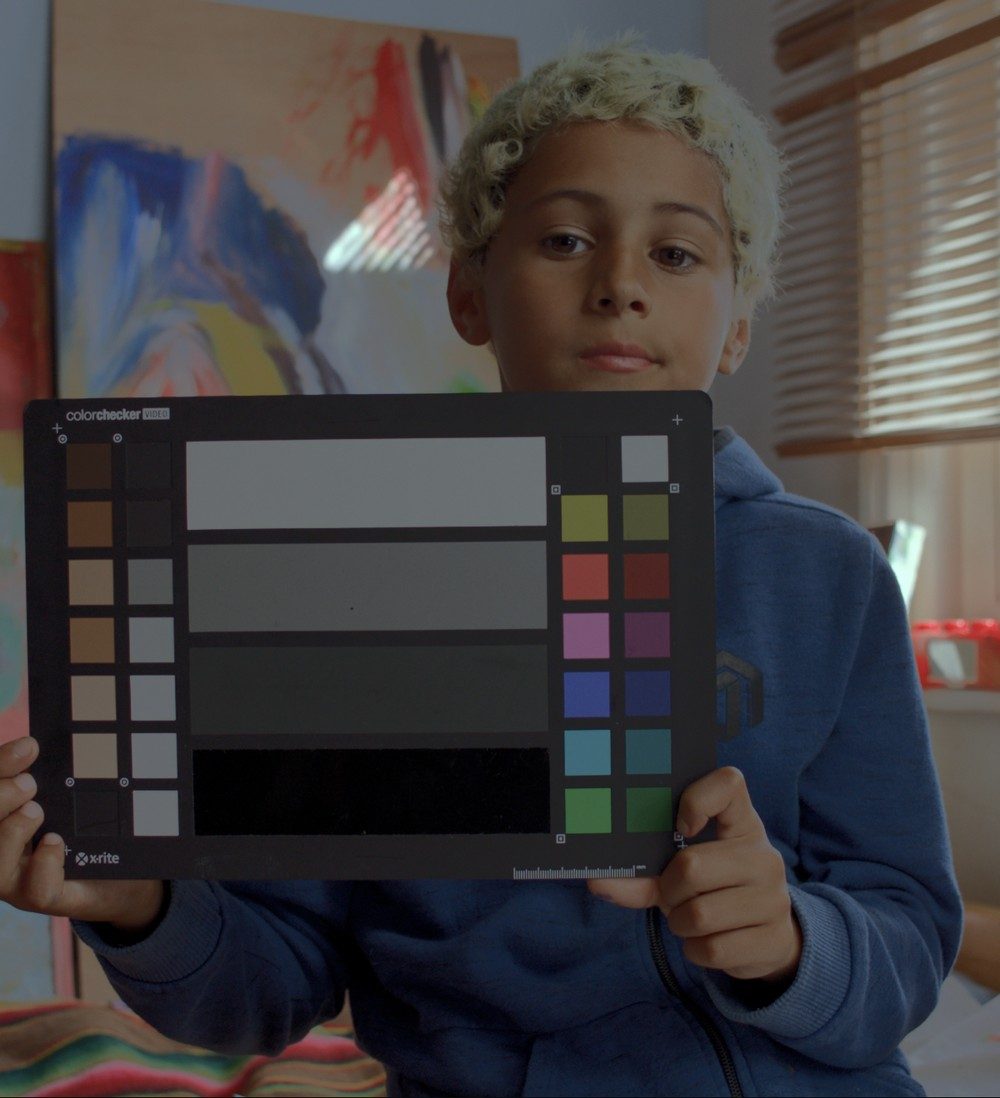
0
0
+1 stop
+1 stop
+2 stops
+2 stops
One shot exposed −2 to +2 stops through VISION3 500T and Kodak 5384: the shoulder holds the window, the toe settles the shadows.
The film stocks

413 modelled stock emulations.

Emulations of current and historical camera films, slide and instant films, black-and-white films and release prints, each modelled from published film data. A few of them:

Motion-picture negatives

  • Kodak VISION3 500T 5219 (2007)
  • Kodak VISION3 50D 5203 (2011)
  • Kodak VISION3 250D 5207 (2009)
  • Kodak EXR 500T 5298 (1994)
  • Kodak EXR 200T 5293 (1992)
  • Kodak ECN II 5247 (1974)
  • Kodak ECN 5247 (1950)
  • Fuji ETERNA 500T 8573 (2004)
  • Fuji ETERNA Vivid 500 8547 (2009)

Slide and reversal

  • Kodachrome 25 (1974)
  • Kodachrome 64 (1974)
  • Fuji Velvia 50 (1990)
  • Fuji Velvia 100 (2005)
  • Fuji Provia 100F (2000)
  • Ektachrome E100 (2018)
  • Kodak 100D Reversal 5285 (1999)
  • Ektachrome 7240 125T (1975)

Stills negatives

  • Kodak Portra 400 (2010)
  • Kodak Ektar 100 (2008)
  • Kodak Gold 200 (1988)
  • Fuji Pro 400H (2004)
  • Fuji Superia X-TRA 400 (2003)
  • Agfacolor Optima 200 (1998)
  • HARMAN Phoenix 200 (2023)
  • ORWO NC500 (C-41, EI 400) (2022)

Black and white

  • Kodak TRI-X 400 (1954)
  • Kodak Double-X 5222 (D-96) (by 1960)
  • Kodak Plus-X 5231 (D-96) (1956)
  • Ilford HP5 Plus 400 (1989)
  • Ilford Delta 3200 (1998)
  • Foma Fomapan 400 (1994)
  • ORWO UN54 (by 2008)
  • Polaroid Type 55 P/N Positive (1961)

Print films

  • Kodak VISION 2383 (1998)
  • Kodak VISION Premier 2393 (1998)
  • Kodak 5384/7384 (1982)
  • Fuji ETERNA-CP 3513DI (2002)
  • Eastman Color Print 5381 (1950)
  • Kodak B&W Print 2302 (2000)
  • DRIFTWOOD PRINT
VISION3 500T
VISION3 500T
Kodachrome 64
Kodachrome 64
Velvia 50
Velvia 50
Portra 400
Portra 400
TRI-X 5233 (1954)
TRI-X 5233 (1954)
ECN II 5247 (1974)
ECN II 5247 (1974)
One portrait, six camera films.
Black and white
Black and white. TRI-X 400 printed on Kodak 2302, with a red contrast filter and Zone Development N+1.
A century of colour

The historical processes,
each with its own laboratory.

Not filters with old names: each historical process is rebuilt from what the process physically did, with the controls of that process. All are historical reconstructions and include estimates.

Technicolor I to V

From the 1917 additive process to the dye-transfer prints of the 1950s, each with its own controls. Technicolor V is built as a dye-transfer laboratory: separation filters, matrix films, dye transfer and the projector lamp.

Two-colour processes

Cinecolor, Prizma II and Multicolor, with registration, side weave and base defocus of double-coated prints.

Gasparcolor (1934)

The three-colour silver-dye-bleach print of the 1930s animators.

Kinemacolor

The additive two-colour system of the 1900s, with its alternating records.

Stencil and hand colour

Pathéchrome stencils and Handschiegl relief colouring over a black-and-white print.

Sonochrome tints (1929)

Seventeen tinted print bases, from Rose Doree to Nocturne.

Additive screens and instant

Dufaycolor, Polavision and Polaroid instant films.

Colour kinescope (1956)

Television recorded to film, as the networks did.

Technicolor V
Technicolor V. The dye-transfer route, projected with the carbon arc.
Cinecolor
Cinecolor. The two-colour print, red-orange and blue-green.
For every colourist

Essentials, or the whole lab.

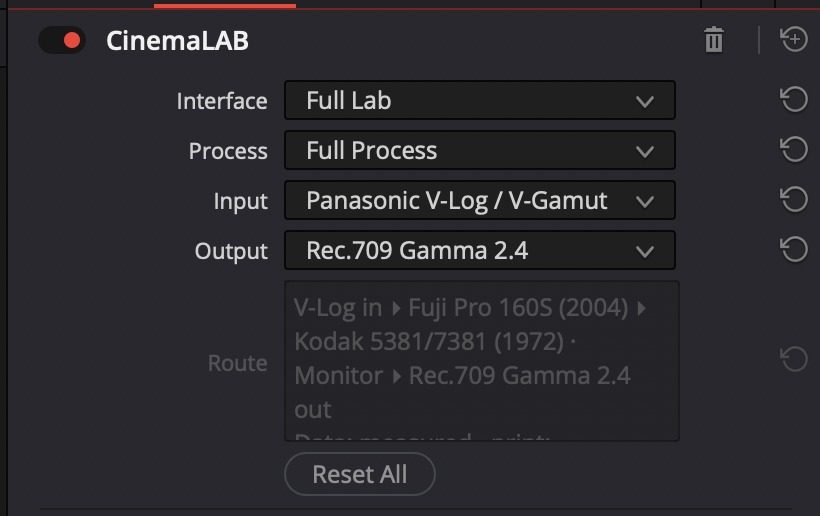
One switch. Essentials shows the controls that make a good film picture; Full Lab opens every laboratory control. Inert controls hide themselves, and a Route line says exactly what the node is doing.

Essentials fast

  • Exposure, Time Shot and Skin Tone
  • Shadows, Mids and Highlights
  • Contrast and Colour
  • Warm–Cool and Green–Magenta printer points
  • Camera film and print film, Print Strength
  • Grain, halation and bloom
  • Starting Looks and your saved grades
  • Projector black and white, Strength and Lift

Full Lab everything

  • Push / Pull, toe, shoulder and Zone Development
  • Crossover, layer speed and shoulder colour
  • Printer lights (R / G / B), preflash and filtration
  • Intermediates, separations and the film recorder
  • Print development, dye grading and dye mixer
  • Viewing surround, veiling light and Soft Gamut
  • Ageing and wear, gate weave
  • Charts, densitometer, Match LUT, A/B, LUT export
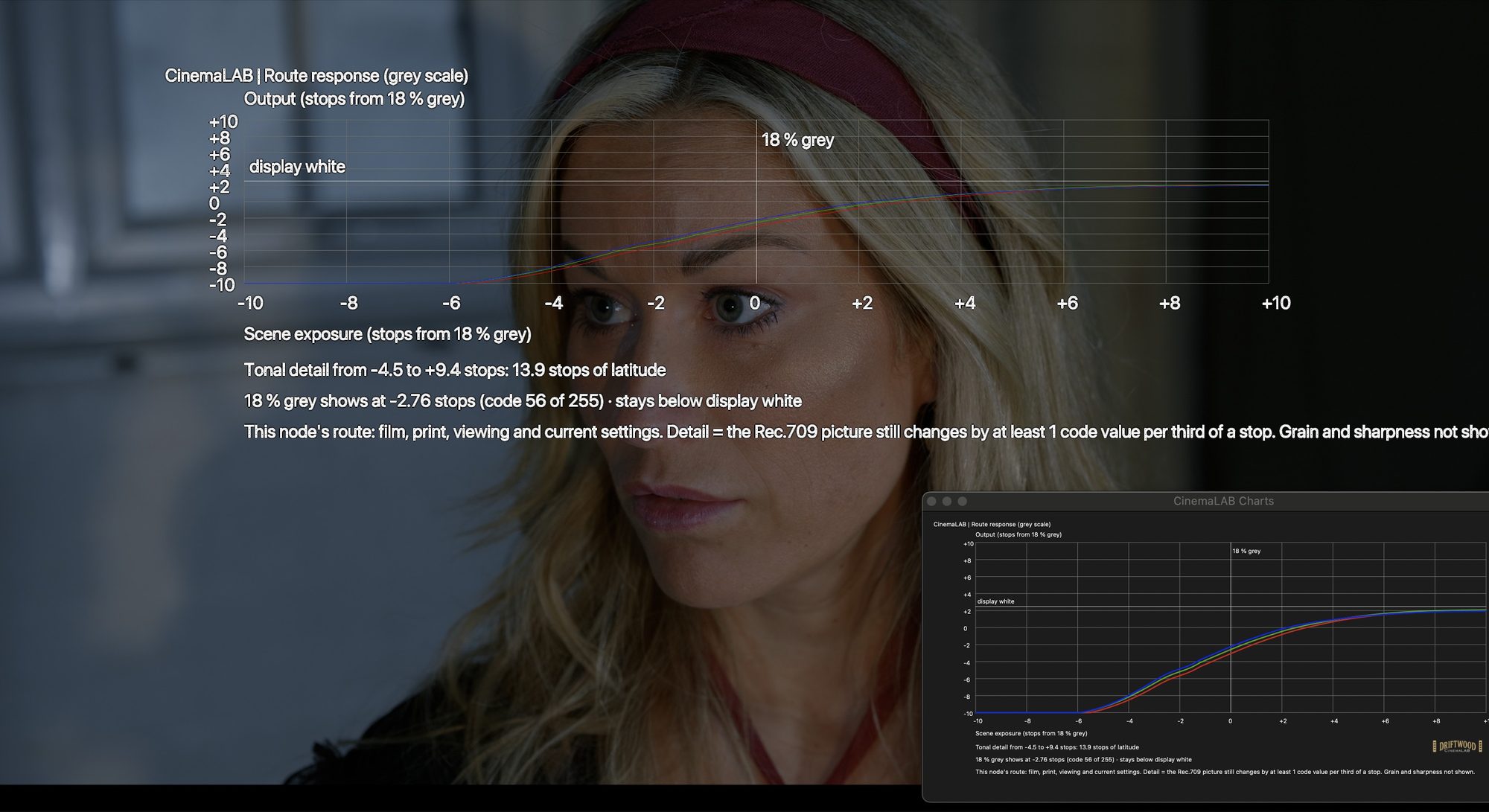
Inspector with the Route line
The Route line. Input, output and the whole route of the node, under the Process switch.
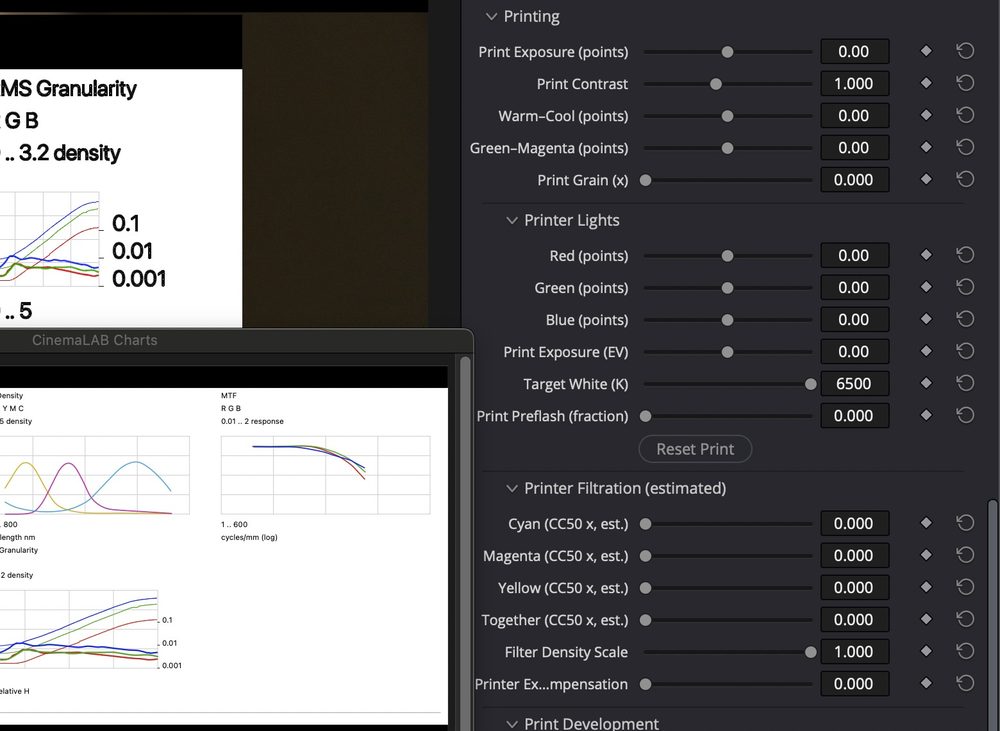
Full Lab with Printing and the Charts window
Full Lab. Printing open with printer lights and filtration, beside the Charts window.
Tools

Measure it, match it, keep it.

Match LUT

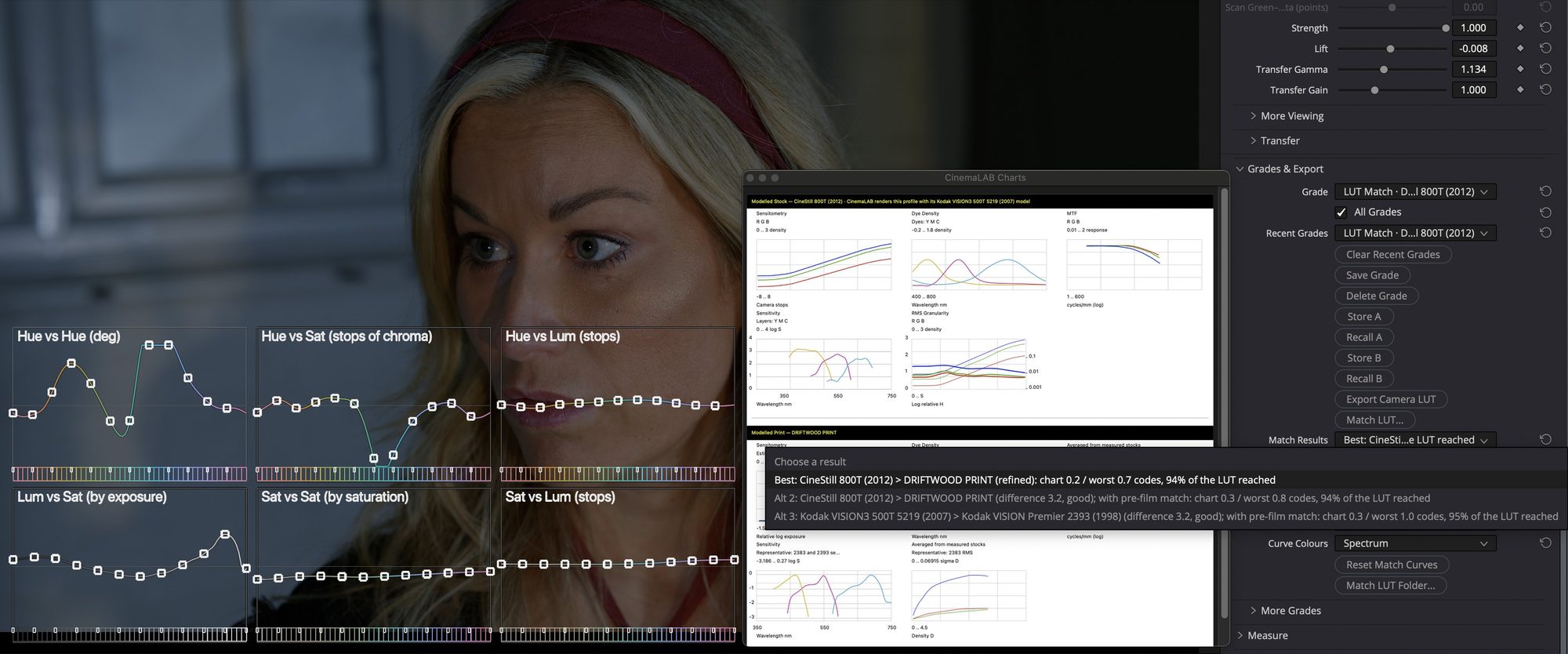
Give CinemaLAB any .cube look and it searches the films and prints for the closest photographic route, then refines it. You get a film version of the look that still answers exposure like film, with Match Strength and drawn Match Curves to finish it.

Time Shot

Measures the frame once and sets exposure, favouring skin when it is in shot. Never changes during playback.

Charts and densitometer

Every profile's curves on screen, a Route Response chart of the whole chain, and a densitometer that reads negative and print density anywhere in the picture.

Starting Looks

Complete laboratory setups in one click (Modern Cinema 500T to 2383, Fine-Grain Daylight, Slide Film, Classic Black and White, The 80s, Technicolor period looks...) and every control stays editable.

Grades, A/B and LUT export

Save grades to your own library, compare setups with A/B memories, and export a .cube of any grade for a camera monitor or another application, from any input to any output.

Film behaviour

Crossover, layer speed balance and shoulder colour: the small mismatches between a real film's three layers that make shadows and highlights take different casts.

Texture, scaled to the format

Grain, halation and bloom sized to the film image width you set, so the grain of a small gauge looks like a small gauge. All texture starts off: raise only what you want.

Ageing and wear

Print fade with per-process fade profiles, base stain, dust, scratches, static marks, flow marks and gate weave, all off until you ask for them, with one master amount.

Black-and-white craft

Contrast filters (yellow, orange, red, green, blue) applied before the film's own sensitivity, and Zone Development from the stocks' own development-time curves.

Match LUT
Match LUT. Three results to choose from, and the Match Curves drawn over the picture.
Route Response chart
Route Response. The whole chain as one curve, on the picture and in the Charts window.
Shot on film

Where these stocks were used.

We have gathered published records of the stocks behind 57 filmmaker partnerships and 81 photographers' work, each linked to its source and to the matching CinemaLAB profile.

Barry Lyndon · 1975

Stanley Kubrick + John Alcott

Shot on EASTMAN Color Negative Film 5254.

CinemaLAB emulation: Kodak 5254 100T (1968)
The Long Goodbye · 1973

Robert Altman + Vilmos Zsigmond

Shot on EASTMAN Color Negative Film 5254.

CinemaLAB emulation: Kodak 5254 100T (1968)
Days of Heaven · 1978

Terrence Malick + Nestor Almendros

Shot on EASTMAN Color Negative Film 5247.

CinemaLAB emulation: Kodak ECN II 5247 (1976 Mod.)
Malcolm X · 1992

Spike Lee + Ernest Dickerson

Shot on EASTMAN EXR 50D Color Negative Film 5245.

CinemaLAB emulation: Kodak EXR 50D 5245 (1989)
The Fly · 1986

David Cronenberg + Mark Irwin

Shot on EASTMAN Color High-Speed Negative Film 5294.

CinemaLAB emulation: Eastman High Speed 5294 (1983)
The Untouchables · 1987

Brian De Palma + Stephen H. Burum

Shot on EASTMAN Color Negative Film 5247.

CinemaLAB emulation: Kodak ECN II 5247 (1980 Impr.)
Requirements

Runs where you grade.

  • Mac: Apple Silicon or Intel, macOS 14 (Sonoma) or later; renders on the GPU with Metal.
  • Windows: 64-bit, for DaVinci Resolve and for After Effects / Premiere Pro.
  • Hosts: DaVinci Resolve (OpenFX), Final Cut Pro and Motion, After Effects and Premiere Pro, each with its own installer.
  • Colour: camera log, DaVinci Wide Gamut, Rec.709 and ACEScct in; Rec.709, Rec.2020, DaVinci Intermediate and ACEScct out.
  • Licence: perpetual; one payment, each purchase activates two computers. $125 at launch (Black Friday, first month), then $199.
  • Manual: a full illustrated user manual comes with every installer.
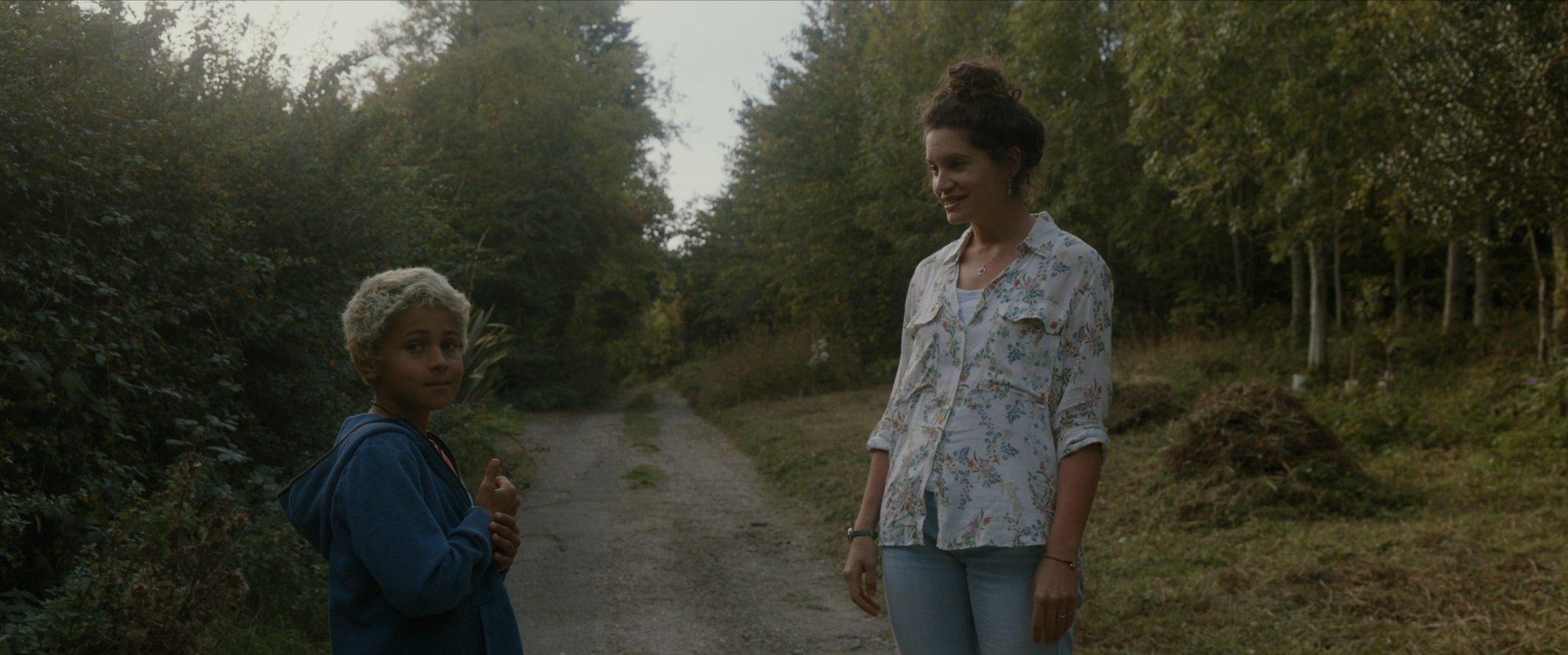
A woman and a boy on a woodland track, graded in CinemaLAB
Questions

Good to know.

Is CinemaLAB a LUT?

No. A LUT is one fixed transform. CinemaLAB renders a photographic process per pixel, in floating point: the negative, development, printer lights, print and viewing are separate stages, so the picture responds to exposure and printing the way film does. You can still export a LUT of any grade.

Which applications does it run in?

DaVinci Resolve (OpenFX), Final Cut Pro and Motion, After Effects and Premiere Pro. Each has its own installer, on Apple Silicon and Intel Macs (macOS 14 or later). DaVinci Resolve and After Effects / Premiere Pro are also available for 64-bit Windows.

What does it cost?

Black Friday launch price $125 for the first month, then $199. One payment, perpetual licence for two computers.

How many computers does a licence cover?

Each purchase activates CinemaLAB on two computers. You activate inside the plugin with your purchase email and key.

How accurate are the stocks?

Each profile is modelled from published film data for that stock. Where a figure was never published, it is filled from a related stock and the profile is marked "includes estimates". No digital emulation reproduces a film exactly, and CinemaLAB does not claim to: it is a simulator built so your picture behaves like the photographic process.

Why does macOS warn me about the installer?

CinemaLAB is independent and unsigned on purpose: we do not pay Apple's yearly developer-certificate fee. The installer window shows the two clicks needed (Privacy & Security, Open Anyway).

Do you know which stock a film was shot on?

Our filmmakers and photographers pages list stocks only where a published source names them, with the link. Where we have not found one, the entry says so. If you know, tell us, with the source, and we will add it.

Film laboratory simulator · Resolve · Final Cut Pro · After Effects · Premiere Pro $125 $199Buy CinemaLAB